
From Resident Concern to Legislative Action
Protecting Children with Stop-Arm Cameras on School Buses
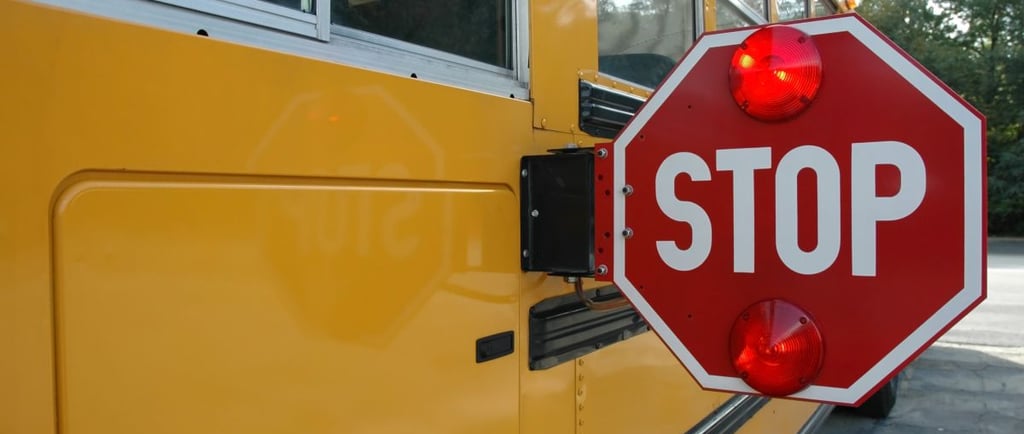
After a District 2 resident reached out to me last year, I began work on a public safety issue that was both personal and urgent. The resident is a father of an Upland High School student with special needs, and each day he personally helps his child onto the school bus in the morning and again when the bus returns home. He shared repeated firsthand experiences of drivers ignoring the extended stop arm and flashing signals, placing his child—and other students—at serious risk. Those moments, when children are boarding or exiting a school bus, are among the most dangerous of the school day, and no parent should have to worry that their child’s safety depends on whether a driver chooses to follow the law.
I researched the issue in depth and confirmed that this is not unique to Upland. It is a nationwide problem, and illegally passing a stopped school bus is prohibited in every state. Through that research, I also identified a key enforcement challenge: under current law, a peace officer must directly witness the violation in order to issue a citation. In practice, this makes enforcement extremely difficult, as violations occur sporadically and often outside the immediate presence of law enforcement, allowing dangerous behavior to continue with little accountability.
Based on this work, I developed a legislative concept focused on strengthening enforcement through the responsible use of technology, an approach already permitted in many states but not currently available in California. Central to the proposal is the narrowly tailored use of cameras mounted on school buses that would activate only when the stop arm is deployed and immediately cease recording once the stop arm is retracted. The cameras would be used solely for the purpose of capturing evidence of vehicles illegally passing a stopped bus, not for general surveillance or monitoring, and any potential citation would still require review and approval by law enforcement before being issued.
After developing this framework, and while I was in Sacramento attending a CalCities Conference, where I had the opportunity to meet with Assemblymember Michelle Rodriguez and her legislative staff. I presented the issue, the supporting research, and a practical, balanced solution centered on the use of camera-based enforcement. Assemblymember Rodriguez recognized the seriousness of the safety risk and the value of the proposal and agreed to work collaboratively to refine the concept into formal draft legislation. The bill language is currently being finalized and is scheduled for public release in the coming months as part of the current legislative cycle.
The proposed legislation would act as a force multiplier for police departments that are already stretched thin, providing an effective tool to address a dangerous violation that is difficult to enforce through traditional means alone. As the language is finalized, I am focused on building a broad coalition of parents, school officials, and community organizations to support the legislation. The ultimate goal is clear: to protect children when they are most vulnerable by using enforcement tools that are effective, enforceable, and designed to prevent tragedy while holding violators accountable.
Disclaimer: The Upland Update is an independent community resource and is not affiliated with the City of Upland. This is my personal initiative to keep residents and businesses informed about key issues, city developments, and community events that impact our daily lives. My goal is to ensure you have clear, transparent, and timely information to stay engaged and involved in shaping Upland’s future.
James Breitling
(909) 342-2523
info@theuplandupdate.com
© 2025. All rights reserved.